
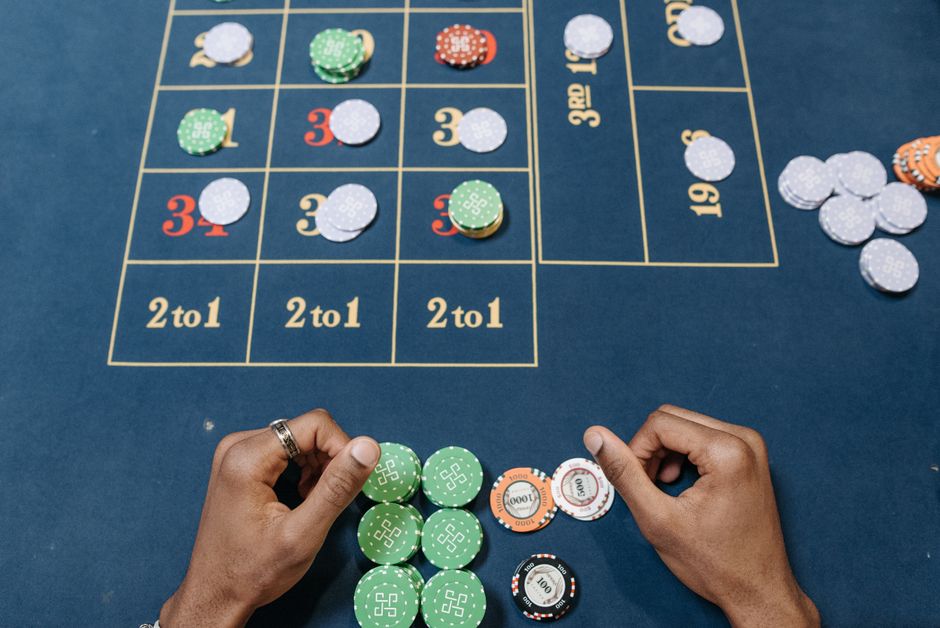
Ask a hundred gamblers why they play, and you'll get a hundred different answers. The thrill of a slot machine's near-miss. The quiet intensity of a poker table at 2 a.m. The sweaty-palmed hope of a 90th-minute accumulator. But ask the operators why they stay in business, and you'll hear the same uncomfortable math over and over. The margin isn't a bug; it's the engine.
That's not a cynical take — it's just the landscape. And if you're going to spend real money inside it, you owe it to yourself to understand the machinery. Here are five truths the marketing departments would rather you didn't sit with too long. This is explained well on 58winn.co.com.
Modern video slots look like arcade games, but they behave like vending machines with a mood disorder. Every spin on a licensed RNG title runs through a random number generator that has no memory of your last 400 spins. The result is a number, not a pattern. The pretty animations are theatre.
What matters is the RTP — the return-to-player percentage baked into the math model. A 96% RTP slot returns, on average, $96 for every $100 wagered. Sounds fair. But here's the catch: "on average" means across millions of spins, not across your Tuesday night session. Over a few hundred spins, the variance can shred you even on a generous RTP.
A few concrete examples from popular categories:
None of this means slots are rigged. It means they're designed. The house edge isn't hidden — it's just dressed up in neon.
Bookmakers don't try to predict outcomes. They try to balance their book so that they profit no matter what happens. That's why you see odds shift the moment money piles onto one side. The overround — the built-in margin across a market — is typically 4% to 8% on a mainstream football match, and higher on niche markets.
That margin compounds. If you're betting 10 singles a week at 5% overround, you're not fighting the sharpness of your analysis. You're fighting a tax, applied before skill even enters the room.
Where it gets genuinely interesting is at the sharper end. Betting exchanges like Betfair let you lay bets against other punters, and the commission (usually 2% to 5% on net winnings) is far cheaper than a traditional bookie's margin. Odds comparison is free and instant. If you're serious about value betting, the exchange price is your benchmark — the bookmaker price is the markup.
Here's the thing about poker: the house doesn't care who wins. It takes a rake — typically 2.5% to 5% of each pot, capped — and watches the players fight over the rest. That means if you're better than the table, you can genuinely make money. Consistently. That's a rarity in this industry, and it's why poker attracts a different species of player.
But "better than the table" is doing a lot of heavy lifting. Modern online poker at low stakes is soft enough to beat with a solid preflop range, position awareness, and disciplined bankroll management. At middle and high stakes, you'll run into solvers, HUD users and semi-professionals who know their equity cold.
A quick reality check for anyone thinking of grinding cash games:
A 100% match deposit bonus with a 40x wagering requirement sounds like free money until you do the arithmetic. Deposit $100, get $100 bonus, and now you've got to wager $4,000 before withdrawing anything (and sometimes the actual sum is bonus plus deposit, so $8,000). On a slot with a 96% RTP, you're expected to lose $320 working through that requirement before you even reach the withdrawal button.
Are bonuses worthless? No. They change the expected value of a session meaningfully — sometimes upside down in the player's favour, especially on sticky bonuses or free spin offers with no wagering. But the fine print is where the deal actually lives.
Before claiming any promotion, check:
Every experienced player eventually arrives at the same conclusion: you can't outsmart the machines, and you can't outrun the margin. What you can control is your behaviour over time. That means bankroll management, limits, session length, and — frankly — knowing when to log off.
The bookmakers and casinos are running a business. You're running a budget. Treat those two things as fundamentally different, and you'll avoid the biggest leak in iGaming: playing money you need with money that hates you. Deposit limits, self-exclusion tools, reality checks — these aren't just compliance boxes. They're the tools of a sharper player.
iGaming is not a rigged carnival. It's a precisely engineered product with maths standing behind every payout graph and a marketing budget designed to make that maths feel invisible. The games are fun. The odds are published. The margin is baked in. The only thing not written into the code is the player's judgement.
Play for entertainment, size your bets to your budget, treat bonuses as conditional offers rather than gifts, and understand that the house edge is simply the price of admission. Do that, and you can enjoy the whole thing — slots, sportsbooks, poker tables and all — without pretending the maths isn't real.

Hi, my name is Anthony kuber. I am artist and fashion designer.
I love to travel and writing blogging.
Your email address will not be published. Required fields are marked *
Software Developer & Writer
Hey, I'm Diva, a developer and writer blending code and creativity. I'm driven by a deep curiosity and a relentless pursuit of excellence. Join me as I craft digital solutions and captivating stories.


