
Most people who lose money gambling don't lose it because the games are rigged. They lose it because they never bothered to understand what they were actually up against. That sounds harsh, but it's the truth that separates the small percentage of players who grind out a long-term profit from the crowd that feeds the ecosystem. Whether you're spinning slots at 3 a.m., grinding a poker cash game, or sweating a Sunday accumulator, the same principles apply. Let's talk about what actually matters.
Every casino game has a built-in mathematical advantage for the operator. That's not a conspiracy; it's how the business survives. What separates smart players from the rest is knowing exactly how big that edge is game by game, because the differences are enormous.
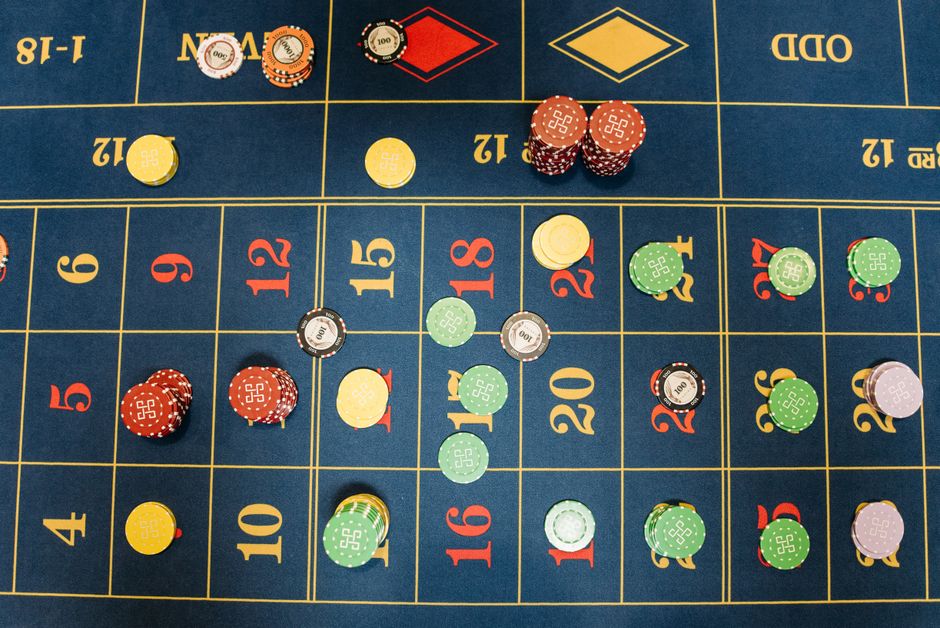
If you sit down at American roulette instead of European, you've volunteered to pay twice the tax for the exact same experience. That single choice says more about your long-term results than any hot streak ever will.
Here's something most slot players don't internalize: modern video slots are driven by random number generators, but that doesn't mean all slots behave the same. Two machines sitting side by side can have wildly different volatility profiles.
Low-volatility slots pay small amounts frequently. High-volatility slots like Money Train or San Quentin can go hundreds of spins without a meaningful win, then dump 500x your stake in a bonus round. Neither is better; they suit different bankrolls and temperaments. A player with $50 who sits on a high-volatility slot is going to get destroyed by variance before the RTP ever evens out. A player with $500 on a low-volatility slot will grind slowly and feel like they're not going anywhere. For a closer look, https://winvn.company/ has helpful details.
Always check the RTP before you load a game. It's usually listed in the paytable or the game info screen. Anything under 95% is aggressively priced, and some providers ship the same title with different RTP settings to different operators. That 96.5% version you played at one casino might be 94% somewhere else.
Poker is the only game in the casino where you can genuinely have a long-term edge over the other players. That edge does not come from bluffing more. It comes from folding more than you want to.
New players lose because they play too many hands. At a nine-handed table, a disciplined player folds roughly 75–80% of their starting hands pre-flop. If you're playing 40% of hands, you're bleeding chips and everyone at the table knows it.
A few concrete principles that actually move the needle:
If you're playing micro-stakes online, the rake is brutal and the field is tougher than people think. Tournament poker is a better entry point for beginners because the rake structure is friendlier and variance gives everyone a story to tell.
Singles betting is where sharp bettors live. Accumulators — parlays for the American audience — are where the bookmakers make their Sunday money. Every leg you add multiplies the payout, but it also multiplies the bookmaker's margin. A four-leg accumulator at 5% margin per leg becomes a 20% effective edge for the house. Add a fifth leg and you're basically donating.
Then there's the cash-out button, which sounds like a safety net but is really a way for the book to buy your ticket at a discount. The offer you see is almost always worse than the fair value of your position. If you're worried about a game going sideways, the smarter play is to hedge on an exchange, not to accept the sportsbook's lowball offer.
Line shopping matters too. The same Premier League match might be priced at 1.90 on one book and 2.02 on another. Over 500 bets, that's the difference between a losing year and a winning one.
Everything above collapses into one practice: managing your bankroll like it matters. It does. Players who risk 10% of their roll on a single spin or bet are mathematically doomed regardless of skill. Players who risk 1–2% can survive the variance long enough for their edge (if they have one) to play out.
The operators track everything you do. There's no reason you shouldn't track yourself with the same rigor.
None of this will make you rich overnight. That's not the point. The point is that iGaming is a paid entertainment product, and if you're going to pay, you should know the price. The players who last aren't the ones with the best instincts — they're the ones who did the reading, respected the math, and treated the whole thing as a discipline instead of a lottery ticket. Everything else is noise generated by people selling you a dream.

Hi, my name is Anthony kuber. I am artist and fashion designer.
I love to travel and writing blogging.
Your email address will not be published. Required fields are marked *
Software Developer & Writer
Hey, I'm Diva, a developer and writer blending code and creativity. I'm driven by a deep curiosity and a relentless pursuit of excellence. Join me as I craft digital solutions and captivating stories.


